A quick word of warning to the faint of heart; we are, indeed, venturing into the Vale of the Spoiler.
We start with a narrator, the identity of which I’m sure the audience will never be made aware of, entreating us to tell a story and see if we remember it exactly as it happened. By now, this has come to symbolise to even the most switched off of audiences that the film makers are attempting to re-imagine a fairy tale that has already suffered complete and utter Disneyfication only to be further misinterpreted into an “edgy, cool and contemporary” way that’s down with the kids and their slightly emo tendencies as shaped by the works of Tim Burton and Joss Whedon.
Once you get over the shocking (and increasingly commonplace) resemblance to parts of The Chronicles of Narnia and Lord of the Rings, you realise that you’ve been left with a very uncertain feeling about the entire experience. For a lot of the time, this film didn’t know what it wanted to be or who it wanted to appeal to. The audience was split right down the middle between children and adults and while it is possible to make a cohesive mix of things that appeal to both, this film left a lot to be desired as the audience, were party to a very strange game of tonal tennis, oftentimes, volleying between the dark and sinister origin story and the light, and uncomplicated world of the Fairies with light sprinklings of action-comedy quality one liners.
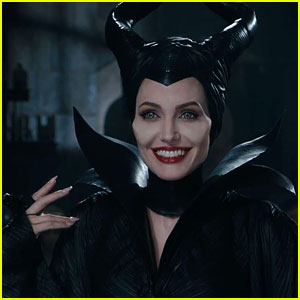
The film begins with a fairy child and her human companion who grow to love each other but mature into the protagonist and antagonist of the story. And just when you think this will mature into a twisted Romeo & Juliet-style tale with a tragedy of inevitability, the tone switches to a supernatural revenge fantasy. Maleficent is now large and in charge of the Moors. And her inaugural act as the Princess of Darkness is to curse the newborn Aurora. Admittedly, Angelina Jolie cuts an impressive figure in her black robes and horns. It would almost be impossible to buy into her as ever having been a good person in this story were it not for her shutting up the irritating fairy stylings of Lesley Manville, Imelda Staunton and Juno Temple as Flittle, Knotgrass and Thistlewit.
Now, with a newly cursed baby and the Three Stoogettes to antagonise, Maleficent winds up inadvertently caring for Princess Aurora. That, on its own, is easy enough to get behind but then, we are treated to Maleficent, the self-appointed Queen of Darkness, acting in a role best suited to Nelson from the Simpsons. Over the years, Maleficent grows to care for the young Aurora and it’s at this point that you can really start to see the lack of faith in this edgy re-telling of a re-telling. The audience has already bought into the idea of this film’s function of subverting classical Disneyfied expectations, it is not necessary to lift elements clean out of other fairy tales. So far, we’ve had a nod to Snow White with Stefan stealing Maleficent’s wings and taking them to King Henry of Scottish Alsace-Lorraine, Maleficent cursing Aurora to only be awakened by “True Love’s Kiss” and now, the antagonist is warming up to a character that she actively refers to as “Beastie” (we haven’t even reached the worst of it yet).
Finally, it is revealed that, Aurora, unlike her animated predecessor, is not a reserved, singing, damsel. Elle Fanning does a good job of portraying an updated concept of a princess but this incarnation seems to owe less to Aurora from Sleeping Beauty than she does to Rapunzel from Tangled. This version of Aurora implicitly trusts the Dark Fairy, believing her to be a Fairy Godmother. Her mannerisms seem to be an obvious grab at the teenage demographic even to the point of falling for the first One Direction look alike she lays eyes on in the form of Prince Philip. We are spared too much of their inevitable annoyances as Maleficent, thankfully, sees fit to routinely put the two of them to sleep in order to move the plot forward.
We are suddenly dropped back into the seemingly sinister tone of things with Maleficent and Diaval sneaking Philip into the castle to kiss Aurora where, fueled by the curse, she sought out a spinning wheel and fell asleep for the fourth time in the film. Thankfully, Philip doesn’t say too much (for obvious reasons) and they succeed in getting him to her room for the fated kiss. And this is where things take a turn for the desperate. Philip kisses Aurora despite protestations of it being more than a little bit creepy and let’s see if you can guess what happens next. . . . .
You never will, so here it is; Aurora fails to wake up and we are left with the heartbreaking image of Maleficent staring down at the seemingly, lifeless body of the girl she’s come to know as “Beastie”, forever guarding her until one who is worthy comes to break the curse and at what point did you suspect that this was a lie? Maleficent gives a heartwarming speech about how she has learned to love again right before a kiss on the forehead which lifts the curse. This film is so obsessed with appearing to subvert expectations that it lifts a major plot point right out of a more popular film. If you take nothing else away from this review, at least take note of that.
And we are rewarded for our patience, as an audience, with yet another tonal shift. This time, we’ve ventured just a bit too close to Lord of the Rings territory as the scene is just a bit too full. It has everything; a dragon, knights, the King, a fairy getting her wings back, fire magic and just when you think you can’t take anymore, a fall into the abyss. Granted, it’s not the worst end battle scene ever, it’s just cluttered to the point where it is almost impossible to appreciate all of the individual elements of the scene.
Cut back to Narnia with King Peter, Queen Susan, King Edmund and Queen Lucy being crowned at Cair Paravel and reigning over the land.
(Yes, that is what it looks like.)
Anyway, Aurora gets crowned Queen of the Moors and Scottish Alsace-Lorraine and it is revealed that she was the narrator all along. And with that, it is revealed that the person who united the two lands was both the hero and villain, thus putting an end to the, tonally confused, cliché-fest that was this film.
That said, the quality of the visual effects really does Robert Stromberg and his art team proud. Having provided the production design for Burton’s Alice in Wonderland, Raimi’s Oz the Great and Powerful as well as Cameron’s Avatar, it is clear that the film is in, aesthetically, very capable hands. Despite the staccato nature of the tonal shifts, the film manages to affect the visual transition quite effectively. It’s just a bit disappointing that the plot and characters couldn’t be as synchronous.
All in all, Maleficent is, at best, a bit off kilter and, at worst, a film with a little split personality disorder. It’s still worth watching for the strength of Jolie’s portrayal of the character in the latter half of the film and the stunning visuals, if only, to see the old characters of the Disney classic being given new life.

 screeningsandscreamings.com
interesting take ive read so far. Have not seen the film myself, but curious about all the plot twists you mentioned. might just give it a go..
LikeLike