“Snowpiercer” is a South Korean-American film based on the French graphic novel by Jacques Lob, Le Transperceneige, released in 2013. Set in the not too distant future where a failed global warming experiment has left the Earth frozen and unlivable. The film takes place entirely on a train called Snowpiercer which functions as the only shelter for the few survivors. The train travels the world, powered by a perpetual-motion engine with a class-system established on it that ensures the wealthy inhabit the front while the poor live at the back.
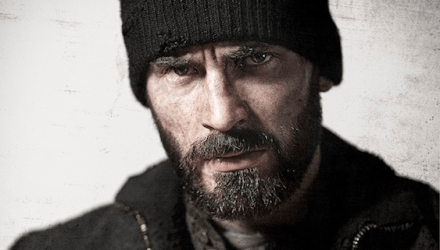
When a revolution, led by Curtis – a stoical, determined and warm-hearted Chris Evans starts from the tail end of the Snowpiercer, and gradually makes its way up to the engine car, the delicate balance that keeps the situation on the Snowpiercer under control are thrown into chaos.
We follow Curtis and his fellow rebels, amongst which, Jamie Bell and Octavia Spencer stick out, as they fight for justice and survival to ensure a better life for their people car after car, battle after battle, and bloodbath after bloodbath. As their journey takes them to the life-support cars of the train, it becomes clear that the Snowpiercer serves as more than just a vehicle: director Bong Joon-ho uses the train as a metaphor for life. On the train, life is provided by a series of elements: the greenhouse car ensures air, the water car guarantees a clean water supply, and the rich inhabitants of the front can even benefit from party and spa cars.
As the expedition to the perpetual motion engine continues, Curtis and the rebels find themselves in a giant, world-spanning allegory for life and religion. Children are taught to worship Wilfred, the creator and leader of the train as a god. All the while, they are brought up in the belief that life outside of the Snowpiercer is impossible with those who have tried to leave the train and failed and/or died serving as a cautionary tale.
The final confrontation, when we see Curtis face to face with his enemy, explores not only a man’s fight for justice, but also humanity’s struggle for survival. Proving to be a deep and brilliantly written story, “Snowpiercer” deals with themes of self-loathing, acceptance one’s true nature and destiny as well as sacrifice. The remarkable cast makes the film a well constructed machine that progresses smoothly: Tilda Swinton as the evil train manager, Mason, gives yet another magnificent performance. Chris Evans in the leading role is believable and mesmerizing as the reluctant leader of the rebellion. The incredibly talented South Korean actor Song Kang-ho portrays Minsu, a security specialist who will takes the rebels to the front of the train.
The original score by Marco Beltrami fits the film perfectly, giving it a unique sense of continuity. With outstanding cinematography and set design, “Snowpiercer” is brilliantly constructed and visually spectacular to the point where it seems real.
There are some similarities with “The Hunger Games” trilogy: the dictatorial regimen and the ruthless social order resemble the ones of Capitol City. It’s not unusual in stories that deal with dictatorship and social injustice to find a rebellious figure that starts from the bottom – in “Snowpiercer” it’s the tail of the train, in Suzanne Collins’ novels is District 12 – and climbs their way up to the top of the hierarchical pyramid. Both Chris Evans’ Curtis and Jennifer Lawrence’s Katniss struggle to accept their role as leaders. While “The Hunger Games” trilogy deals more deeply with the human relationships between the characters and how they’re affected by war, “Snowpiercer” manages to explore man’s struggle for survival and equity without falling into clichés, which makes the film intriguing and unmissable.

 screeningsandscreamings.com
Comments
Trackbacks & Pingbacks
No incoming links found yet.