Logo

  • Where do we go from here?

    So we’ve come to the point in the “Evil Dead” franchise’s history where the trilogy had finally come to a close. The films were a smash hit with horror fans and had all become cult classics in their own right. But with a fan following as devoted as they had that was clamouring for more when no other films were planned, where was the franchise to go? Over the years after the close of the trilogy, Ash and the deadites started to branch out from cinema and turned up in a number of different mediums.

    … Continue Reading

    Action Comedy Army of Darkness Bruce Campbell Comic Books Dark Horse Comics Dynamite Entertainment Evil Dead Sequels Evil Dead TV Show Horror Horror Classics Horror Movies Horror Reboot Marvel Comics Marvel Entertainment Marvel Zombies PlayStation Sam Raimi The Evil Dead The Evil Dead Franchise Xbox
  • Army of Darkness 1992

    Due to the popularity of the first two films and the cliffhanger twist ending of “Evil Dead 2”, talks of a third instalment in the series had been floating around for a number of years, and as the 80s was coming to a close, production was just beginning on the final chapter of Ash’s story. Fans waited with baited breath to see how their beloved series would end and just over a decade after the original hit theatres, the final piece of the puzzle was released, dropping the “Evil Dead” part of the title, as “Army of Darkness” in 1992. … Continue Reading

    Action Comedy Action Movies Army of Darkness Bruce Campbell Film Film and TV film review Horror Horror Classics Horror Movies Magic Necronomicon Sam Raimi Suspense The Evil Dead The Evil Dead Franchise The Evil Dead Sequels Time Travel
  • The Evil Dead II: Dead by Dawn (1987)

    Along with a number of other horror classics, “The Evil Dead” had paved the way for a boom in interest for horror cinema in the 80s. Never before had audiences clamoured for violence, mayhem and terror the way they were then, so it came as no surprise when, six years after “The Evil Dead” hit theatres, the world was treated to its long anticipated sequel, “Evil Dead 2”, also known as “Evil Dead II: Dead by Dawn”. … Continue Reading

    80s Horror 80s Movies Action Movies Army of Darkness Ash Bruce Campbell Evil Dead Sequels Film Film and TV Horror Horror Movies Sam Raimi The Evil Dead Franchise
  • Fans of the low budget, cult classic, horror movie series, “The Evil Dead” were jumping for joy recently when Sam Raimi, director of the original movies, announced to the world that the series was going to continue as a TV show. The good news kept coming when, not long after the original announcement was made, B-movie legend and hero of the movie trilogy Bruce Campbell announced over twitter that he would be starring in the upcoming show. … Continue Reading

    80s Horror B-Movie Bruce Campbell Film and TV Horror Classics Horror Movies Horror Sequels Horror TV Shows Psychological Thriller Sam Raimi The Evil Dead The Evil Dead Franchise The Evil Dead Sequels
  • The CW’s Arrow saw its climactic second season finale earlier this year with Oliver Queen facing off against his one-time friend turned villain, Slade Wilson, in a battle to save his city. Since season two wrapped up, fans have been eagerly trying to get a hold of any piece of information they can about what’s in store for the upcoming third season. And while some aspects of season three’s story are still being kept a secret, a combination of fan speculation and a few snippets of teaser information here and there from the cast and crew, we’re starting to piece together some of what we have in store. … Continue Reading

    Arrow Batman Black Canary Comic Book TV Shows Comic Books Comic-Con DC Comics Drama Film and TV Film and TV News Green Arrow Justice League League of Shadows Manhunter Sci-fi Sci-fi & Fantasy SDCC Television News The Atom The CW The Flash Wildcat
  • Home
  • Film
    • News
    • Reviews
    • Features
  • Television
    • News
    • Reviews
    • Features
  • Gaming
    • News
    • Reviews
    • Features
  • Technology
    • News
    • Reviews
    • Features
  • All About Us
    • Who We Are
    • Write For Us

Search

Why ‘House of Cards’ is better than ‘Scandal’.

  • May 30, 2014
  • by Tariye Peterside
  • · Drama · Editorials · Entertainment · Features · Film and Television · Opinions and Editorials · Political Drama · Soap Opera · Television

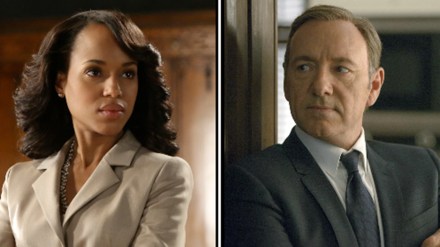
When watching these two programmes, it becomes very easy to be drawn into the seemingly dull but trendy world of the morally grey. But there’s no denying that these two shows have captivated audiences for very different reasons. Scandal lures us in with the promise of romance, excitement and the inevitable triumph of a clear and distinct ‘white hat’ while House of Cards keeps us captivated with the machinations of the cold, harsh and self-serving.

Both shows serve as windows into worlds so twisted they might as well be in alternate dimensions. However, while Scandal chooses to look at power through the eyes of someone who has no desire for it, House of Cards takes us on a whirlwind ride exploring the addiction to it and the lengths to which people are prepared to go to get it. There is something very naïve in the way Scandal handles the relationship of mere mortals to power and influence and her name is Olivia Pope.

This character is set up as the very clear and distinctive “hero” of the story. Everything she does, she does because she believes herself to be acting in service to her ideals. There is nothing inherently wrong with wanting to see the best in everyone and every situation but the show’s entire run seems to be punctuated with Olivia being confronted with the ugly truth about what it means to be human and coming to the realisation that she may be in the wrong business. How many times can Olivia or, in fact, anyone on the show or watching it still be surprised by the revelation of reprehensible acts.

The protagonist (and main antagonist) of House of Cards, Frank Underwood does not shy away from the harsh reality of human nature but revels in and manipulates it like a conductor in thrall to his favourite symphony. He makes a point of using any and all aspects of the human condition to his advantage, all the while, fully acknowledging that anyone else in his position would probably do the exact same thing. There is no greater purpose other than attaining the most power and, likewise, it is not surprising to Frank or the audience when someone reveals themselves to be just as conniving as he is.

At this point in both shows, it would be extremely foolhardy to entertain the notion that there is anything of realism in their respective plots; these are both TV dramas, after all. However, there is something just that little bit more engaging with the manner of speech deployed in House of Cards. All throughout this show, it is made clear to the watcher that there are no pretensions to anything greater among the characters. There are no long speeches about lofty ideals like the compromise of virtue, the duties of Command or the purpose of trying to do the right thing in a world that simply doesn’t care anymore. All there is are people and the ultimate realisation that they are all as hungry and ruthless as each other.

Where Scandal is concerned, there is nothing tethering any of the characters to even the remotest of realities. Everything about the show is mired in ideals and objective truths that present the audience with a very clear and uncomplicated view of the characters. What we are left with in Scandal is a remarkably ethically simple programme which often dons the cloak of moral complexity while failing to convince you that the people in it are, just that, people.

In House of Cards, we see the struggles of characters that could be real people in real situations which sometimes amount to a lot of ordinary. We also see the tragic result of what happens to good people who hold fast to their ideals in a world that thrives on their compromise. In the end, we are left with a sense defeat, bewilderment and helplessness as we gaze upon the inevitability of Frank being sworn in as President.

In Scandal, however, we are left staring, dumfounded as Olivia finds out, yet again, that she can never truly be with Fitz while he holds the office of President as well as being clubbed over the head with multiple speeches. This is where we make the realisation that we are not watching people but, rather, the Platonic Forms of people according to Shonda Rhimes.

Share this:

  • Click to share on X (Opens in new window) X
  • Click to share on Facebook (Opens in new window) Facebook
Like Loading...

Related

House of Cards Kerry Washington Kevin Spacey Netflix Political Drama Politics Scandal Shonda Rhimes TV
  • « Prev
  • Next »
Leave A Comment   ↓

Comments

Leave a comment Cancel reply

Trackbacks & Pingbacks

No incoming links found yet.


Search

Newest Articles

  • “The Evil Dead” and the road to Television: Part 4 September 8, 2014
  • “The Evil Dead” and the road to Television: Part 3 September 1, 2014
  • “The Evil Dead” and the road to Television: Part 2 August 24, 2014
  • “The Evil Dead” and the road to Television: Part 1 August 16, 2014
  • Arrow Season Three: What to Expect August 7, 2014
  • The Post-Guardians Marvel Cinematic Universe August 2, 2014
  • Wham, Bam, it’s The Rock and Shazam July 23, 2014
  • It’s “Oldboy” Bitches! July 11, 2014
  • “Snowpiercer”: A Sci-fi, Action film that’s not afraid to make you think. July 7, 2014
  • Why ‘House of Cards’ is better than ‘Scandal’. May 30, 2014

Blog at WordPress.com.

  • Comment
  • Reblog
  • Subscribe Subscribed
    • screeningsandscreamings.com
    • Already have a WordPress.com account? Log in now.
    • screeningsandscreamings.com
    • Subscribe Subscribed
    • Sign up
    • Log in
    • Copy shortlink
    • Report this content
    • View post in Reader
    • Manage subscriptions
    • Collapse this bar
%d