Fans of the low budget, cult classic, horror movie series, “The Evil Dead” were jumping for joy recently when Sam Raimi, director of the original movies, announced to the world that the series was going to continue as a TV show. The good news kept coming when, not long after the original announcement was made, B-movie legend and hero of the movie trilogy Bruce Campbell announced over twitter that he would be starring in the upcoming show. Over two decades since the release of the final instalment of the original trilogy, “Army of Darkness”, in 1992, it came as quite a surprise (albeit a very welcome one) to the fans that we’d be getting an official continuation to the story series hero and pop culture phenomenon, Ashley J Williams. So with new “Evil Dead” content on the horizon, let’s take a look back on the series up to this point and see what exactly it was that got everyone so hooked in the first place.
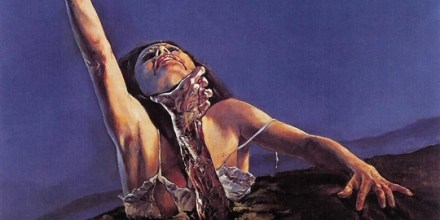
The Evil Dead (1981)
The 80s is often regarded as the best decade in cinematic history for horror films, and with horror classics such as a “Friday the 13th”, “Nightmare on Elmstreet” and “The Shining” all being products of this time period, it isn’t hard to see why. Audience interest in horror was at an all time high, and they were more open than ever to low budget films due to realistic practical gore effects becoming easier and easier to pull off without big studio budgets, so “Evil Dead” came about at an almost perfect time.
The brain child of director Sam Raimi, now better known for directing the original “Spider-man” franchise, with a cast and crew made up of friends and family; “The Evil Dead” follows the story of a group of friends heading up to a deserted cabin in the woods for a getaway, only to accidentally awaken a demonic force that proceeds to systemically possess, torment and kill off the hapless teenagers.
It had a low budget charm that resonated well with fans of horror, as it displayed a level of commitment to the genre that other higher budget films arguably couldn’t achieve. Comparative to bigger studio films, the estimated $90,000 budget of the film was not much to work with, but you could see through the final product and the stories that came after of its production that they were doing everything they could to make the best possible horror film with the budget they had. “Art through adversity” is a phrase often associated with this film, as the team had to overcome a lot of restraints when making it (the famous point of view shots of the demonic energy in the woods had to be achieved by simply duct taping the camera to a piece of wood and running around) but came out the better for it, in the end.
The end result was a horror film that had something for everyone. During the opening act of the film you get a more psychological horror tone as you feel the intense isolation of the teens trapped in the cabin, knowing there was some unseen force out in the woods watching and toying with them. You then get a more traditional horror feel as the demonic activity starts to ramp up and then you start seeing what exactly it is that these films are now so well known for: the gore. More so than almost any film that came before it, “The Evil Dead” did not shy away from throwing as much gore at the audience as they could, in as much excruciating detail as possible. One infamous scene in particular springs to mind where by a character gets a pencil stabbed into his ankle and rather than cutting straight to the pained reaction shot, the camera lingers on the ankle as the pencil is twisted and dug further in with blood gushing down the side. This kind of shock gore horror was something audiences were not particularly familiar with, so the film got a reputation for being something new and exciting.
The excessive gore and some particularly harrowing scenes, such as the infamous ‘tree rape’ scene (it’s exactly what it sounds like), caused no small amount of controversy for the film as a number of different film certification organisations tried to have the film banned outright (and actually succeeded in some cases). For some films, that may have been a curse but for this film, it turned out to be a blessing in disguise. There’s a phenomenon that the internet has dubbed “The Streisand Effect”, where by the more you try to cover something up, the more attention you draw to it, and that effect played a huge part in the success of The Evil Dead. The more people tried to get it banned the more the public wanted to see it. Tales would spread and bootleg copies would be passed around until it became a cult sensation.
So with its place in horror history solidified, and the 80s (particularly 80s horror) being well known for its penchant for sequels, it was almost a certainty that this would not be the last that we’d see of this film. But could a sequel capture the same magic that the original did?
The answer can be found in part two as we delve into the next instalment of the series, “Evil Dead 2: Dead by Dawn”.

 screeningsandscreamings.com
Comments
Trackbacks & Pingbacks